Physiology and pain pathways relevant to labour
- First stage pain
- Visceral afferents from uterus/cervix travel with sympathetic fibres to spinal segments T10–L1
- Pain worsens with cervical dilatation and uterine contractions, anxiety and catecholamines amplify pain
- Second stage pain
- Somatic pain from distension/trauma to vagina, pelvic floor, perineum via pudendal nerve (S2–4)
- Maternal physiological effects of neuraxial analgesia
- Sympathetic block → vasodilation, reduced SVR, hypotension (more likely with higher/rapid block e.g. CSE spinal component)
- Reduced catecholamines may improve uteroplacental perfusion, hypotension can reduce uteroplacental blood flow
Indications
- Maternal request (no need to wait for a specific cervical dilatation if labour established and safe)
- High-risk maternal disease: severe pre-eclampsia, cardiac disease (avoid tachycardia/afterload swings), respiratory disease, obesity/anticipated difficult airway (reduce GA risk)
- Anticipated operative delivery (twin, malpresentation, VBAC, prolonged labour) where extension to surgical anaesthesia may be helpful
Contra-indications
- Patient refusal / lack of consent
- Raised intracranial pressure (due to space-occupying lesion)
- Infection
- At insertion site
- Systemic sepsis / untreated bacteraemia
- Coagulopathy / anticoagulation
- Platelets <,75 ×10⁹/L (context dependent)
- INR >,1.5 or significantly deranged clotting
- Recent anticoagulants (e.g. LMWH <,12 hours for prophylactic dose)
- Allergy to local anaesthetics
- Uncorrected hypovolaemia
Contra-indications
- Patient refusal / lack of consent
- Raised intracranial pressure (due to space-occupying lesion)
- Infection
- At insertion site
- Systemic sepsis / untreated bacteraemia
- Coagulopathy / anticoagulation
- Platelets <,75 ×10⁹/L (context dependent)
- INR >,1.5 or significantly deranged clotting
- Recent anticoagulants (e.g. LMWH <,12 hours for prophylactic dose)
- Allergy to local anaesthetics
- Uncorrected hypovolaemia
Complications
- Failure / inadequate block (affects 1 in 10 patients. Patchy or unilateral analgesia, may require replacement)
- Dural puncture (~1%) → post-dural puncture headache (may require blood patch)
- Hypotension (usually mild, treatable)
- Prolonged second stage of labour and increased likelihood of instrumental delivery
- Pruritus (opioid-related)
- Neurological injury (rare)
- Temporary nerve symptoms ~1 in 2,000
- Permanent harm ~1 in 24,000
- Infection (very rare)
- Epidural abscess
- Meningitis (~1 in 100,000)
- Epidural haematoma (~1 in 170,000)Local anaesthetic systemic toxicity (~1 in 100,000)
Technique
- Typical insertion level L3–4 or L4–5, loss-of-resistance to saline commonly used
- Catheter 4–6 cm in epidural space, aspirate, careful incremental dosing with monitoring
- Test dose: practice varies, aim is to detect intrathecal/intravascular placement (be cautious in labour: tachycardia is non-specific)
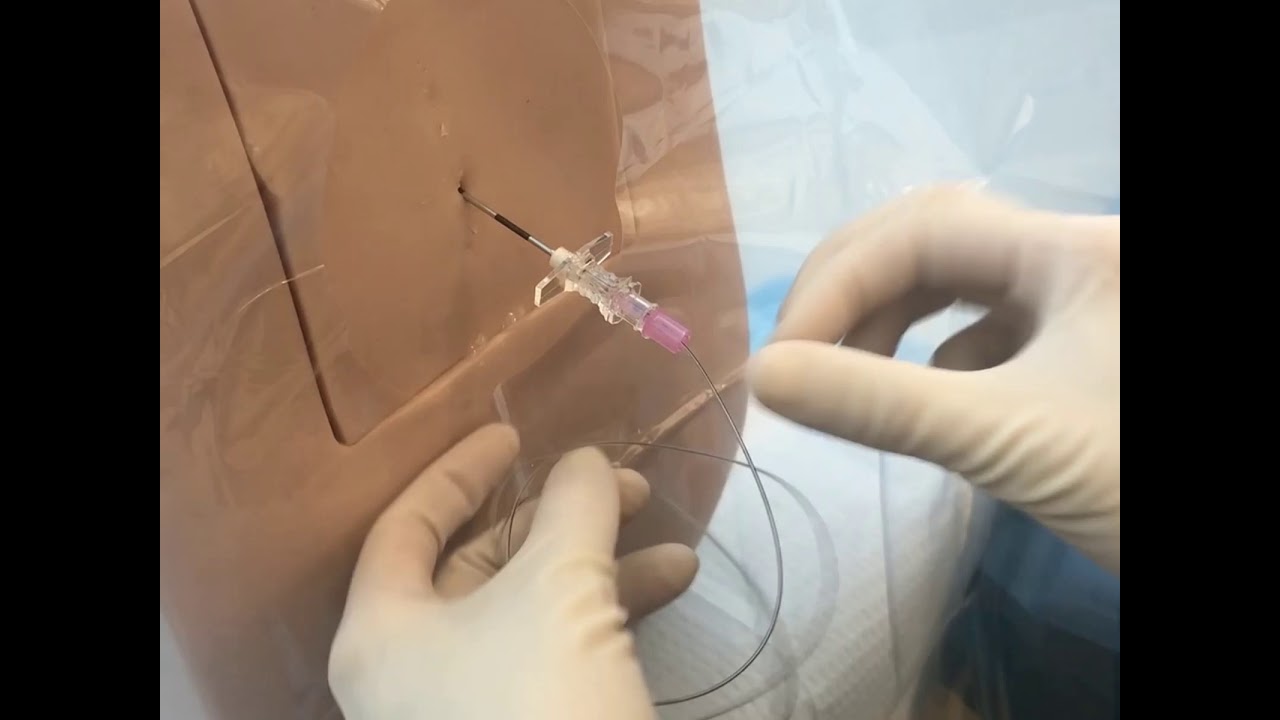
Test dose
- After negative aspiration, administer 10 mL of the PCEA solution (e.g. 0.1% levobupivacaine with fentanyl 2 micrograms/mL) as a test dose.
- Reassess after ~5 minutes for features of intrathecal or intravascular placement:
- Rapid motor block
- Dense or unexpectedly high sensory block
- Hypotension / sympathetic block (e.g. warm, vasodilated legs)
- Paraesthesia or other concerning symptoms → If present, suspect intrathecal catheter and manage accordingly.
- If no concerning features, give a further 10ml of the epidural solution incrementally.
- Formal assessment at ~20 minutes:
- Effective analgesia (maternal report)
- Reduced Entonox requirement
- Evidence of bilateral sensory block (e.g. cold/ethyl chloride)
- Block height appropriate for labour
- No excessive motor block
- Always consider: “Is this epidural likely to be adequate for surgical top-up (e.g. LSCS)?”
Epidural drug regimens and maintenance
- Modern low-dose epidural aims
- Good analgesia with minimal motor block to aid mobilisation and pushing, reduce instrumental delivery risk compared with dense blocks
- Maintenance methods
- PCEA: patient-controlled epidural analgesia (bolus + lockout, reduces clinician workload, improves satisfaction)
- PIEB: programmed intermittent epidural bolus (often superior spread vs continuous infusion, may reduce LA consumption and breakthrough pain)
- Continuous infusion: acceptable but may have higher LA use and more motor block vs PIEB in some studies
Combined spinal–epidural (CSE)
- Rationale
- Rapid onset from intrathecal component + flexibility/maintenance via epidural catheter
- Useful in severe pain, advanced labour, obesity (confirm neuraxial space), or when rapid reliable analgesia desired
- Technique (needle-through-needle common)
- Identify epidural space, pass spinal needle to puncture dura, give intrathecal drug, then thread epidural catheter
- Intrathecal drugs (examples): opioid (fentanyl 10–25 micrograms) ± very low-dose LA (bupivacaine 1.25–2.5 mg) depending on local practice
- Advantages vs epidural
- Faster onset and often better sacral spread, may reduce unilateral/patchy block early on
- Disadvantages/risks
- More hypotension and pruritus (intrathecal opioid), risk of high/total spinal if dosing errors
- Fetal heart rate changes can occur soon after initiation (multifactorial, possibly rapid pain relief → catecholamine shift → uterine hypertonus)
- Epidural catheter function not immediately tested by analgesia (spinal may mask a poorly functioning epidural)
Complications and management (epidural/CSE and remifentanil)
- Hypotension
- Treat promptly: left uterine displacement, IV fluids (judicious), vasopressor (phenylephrine or ephedrine per scenario), assess block height, fetal status
- Phenylephrine often preferred for spinal-related hypotension in obstetrics, ephedrine may be used if bradycardic/low CO state (local practice)
- High/total spinal (especially with CSE or accidental intrathecal dosing of epidural)
- Features: rapid hypotension, bradycardia, dyspnoea, arm numbness, loss of consciousness, fetal compromise
- Management: call for help, left uterine displacement, airway support/ventilation, vasopressors, treat bradycardia, prepare for GA and urgent delivery if needed
- Accidental dural puncture (ADP) and post-dural puncture headache (PDPH)
- Recognise: CSF aspiration, sudden loss of resistance, counsel and document, consider intrathecal catheter (local policy) or resite epidural
- PDPH: postural headache ± neck stiffness, photophobia, tinnitus, treat with hydration/analgesia/caffeine, epidural blood patch for significant symptoms
- Inadequate/patchy/unilateral block (common FRCA scenario)
- Check: catheter position/marking, aspiration, connections/pump, sensory level, maternal position, labour progress
- Interventions: optimise position, give top-up bolus, withdraw catheter 1–2 cm if too deep, replace catheter if persistent failure
- Be cautious with repeated large boluses: risk of high block if catheter migrates intrathecally
- Local anaesthetic systemic toxicity (LAST)
- Rare with low-dose labour solutions but possible with intravascular placement or large top-ups
- Management: stop LA, call for help, airway/ventilation, seizure control, lipid emulsion therapy, ALS modifications
- Infection and epidural haematoma
- Epidural abscess/meningitis: back pain, fever, neurological deficits—urgent MRI and neurosurgical input
- Epidural haematoma: severe back pain, motor weakness/sensory loss, bladder/bowel dysfunction—time-critical MRI and decompression
- Remifentanil complications
- Maternal: sedation, desaturation, apnoea, aspiration risk, chest wall rigidity (rare), nausea
- Fetal/neonatal: potential respiratory depression at delivery, ensure neonatal team aware if used close to birth
Conversion/extension for operative delivery (instrumental delivery / Caesarean section)
- Instrumental delivery in theatre
- Aim for dense perineal block (S2–4) and adequate analgesia for traction/repair, consider epidural top-up with stronger LA (e.g. Ropivacaine) per local policy
- If inadequate neuraxial block: options include pudendal block + local infiltration, spinal, or GA depending on urgency and airway risk
- Epidural top-up for Caesarean section
- Assess existing block quality and catheter function before dosing, give incremental doses with monitoring, aim for T4 sensory level
- Common agents: Ropivacaine (although lots of different options)
- If top-up fails or time-critical: spinal (if safe) or GA, anticipate difficult airway and aspiration risk
Test yourself…
Describe the dermatomal levels required for analgesia in the first and second stages of labour, and explain the difference in pain type.
This is a common physiology-based viva stem.
- First stage: visceral pain from uterus/cervix carried with sympathetic fibres to spinal segments T10–L1
- Second stage: somatic pain from vagina/perineum via pudendal nerve roots S2–4
- Implication: epidural must cover sacral roots for late labour/instrumental delivery, CSE may improve sacral spread early
You are asked to site a labour epidural. What are your contraindications and what checks do you do before starting?
Often examined as a structured safety/consent answer.
- Contraindications: refusal, infection at site, systemic sepsis (relative), coagulopathy/anticoagulation issues, severe hypovolaemia/haemorrhage, raised ICP (mass lesion), allergy to LA (rare)
- Pre-checks: history (back surgery, neuro disease), airway assessment (in case GA needed), obs and baseline BP, IV access, review bloods if indicated (platelets/coag), anticoagulant timing, fetal monitoring plan
- Explain risks/benefits/alternatives, document consent, ensure resus drugs/equipment and help available
Compare epidural analgesia with combined spinal–epidural (CSE) for labour.
A classic comparison viva, structure as onset, quality, risks, practicality.
- Onset: CSE faster due to intrathecal dose, epidural slower onset
- Quality: CSE often better early sacral spread, epidural can be patchy/unilateral initially
- Risks: CSE more hypotension, pruritus, potential fetal heart rate changes, epidural less abrupt haemodynamic change
- Practical: CSE epidural catheter function may be untested initially (spinal masks failure), epidural allows immediate assessment of catheter efficacy
A woman with an epidural develops hypotension and fetal bradycardia shortly after initiation. How do you manage this?
Expect a maternal-first resuscitation approach with fetal considerations.
- Call for help, assess ABC, left uterine displacement, high-flow oxygen if needed, check block height and maternal symptoms
- Treat hypotension promptly with vasopressor (phenylephrine commonly) and judicious IV fluid, treat bradycardia if present
- Stop/reduce oxytocin if uterine hyperstimulation suspected, liaise with obstetric team, continuous fetal monitoring
- If concern for high spinal: prepare for airway support/GA and urgent delivery
How do you manage a unilateral or patchy epidural block in labour?
A frequent on-call scenario, examiners want a stepwise approach and safety awareness.
- Assess: pain location, sensory level bilaterally, motor block, catheter depth/marking, aspiration, pump/line issues, maternal position
- Intervene: reposition (painful side down), give a clinician bolus, consider withdrawing catheter 1–2 cm if too deep, adjust maintenance (PIEB/PCEA settings)
- If persistent failure or repeated breakthrough pain: resite epidural early rather than repeated large boluses
- If urgent operative delivery anticipated: do not rely on a poorly functioning catheter—consider spinal/GA depending on urgency and airway
What are the complications of labour epidural analgesia and how would you counsel a patient?
Give common vs serious, include maternal and neonatal considerations.
- Common: inadequate/patchy block, hypotension, pruritus (if opioid), urinary retention, fever, shivering, back soreness/bruising
- Less common/serious: accidental dural puncture and PDPH, high/total spinal, local anaesthetic toxicity, nerve injury, epidural abscess/meningitis, epidural haematoma
- Explain impact on labour: may increase need for oxytocin and instrumental delivery depending on technique/dose, does not increase Caesarean rate with modern low-dose regimens
Accidental dural puncture occurs during labour epidural insertion. What are your immediate options and subsequent management?
- Immediate: stop, communicate and document, discuss options with patient, consider resiting epidural at another level or placing an intrathecal catheter (local policy) for analgesia
- Post-procedure: counsel regarding PDPH symptoms and when to seek help, provide written information, follow-up plan
- If PDPH develops: conservative measures initially, epidural blood patch for significant or persistent symptoms (after assessment and exclusion of other causes)
How would you extend a labour epidural for emergency Caesarean section, and what is your plan if it fails?
- Assess: urgency (category), current block level/quality, catheter function (aspiration, ease of injection), maternal obs and airway
- Top-up: incremental dosing with fast-onset LA (e.g. lidocaine 2% with adrenaline ± bicarbonate) with close BP monitoring, aim for T4 sensory level
- If inadequate block: do not persist with repeated large boluses, choose spinal (if time and safe) or GA (if urgent or neuraxial unsuitable), with full obstetric GA precautions
- Always prepare vasopressors and manage hypotension proactively, communicate with obstetric team throughout
0 comments
Please log in to leave a comment.